
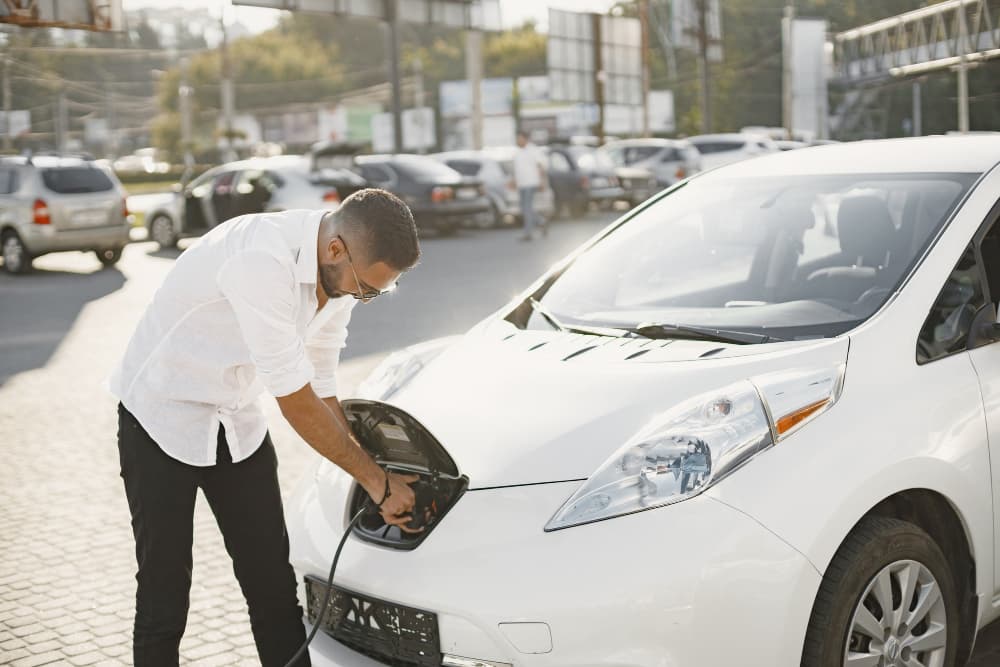
As the world races toward a more sustainable future, electric vehicles (EVs) have shifted from a niche innovation to a mainstream movement. With governments pledging carbon neutrality, automakers phasing out internal combustion engines, and consumers demanding cleaner alternatives, EV adoption is on a steep upward trajectory.
But with the rise in EV usage comes a pressing challenge: charging infrastructure. An EV is only as convenient as its access to charging, and for many, “range anxiety” — the fear of running out of battery without a nearby charger — is a genuine concern.
Fortunately, the EV charging landscape is rapidly evolving. From ultra-fast charging networks to wireless charging streets and vehicle-to-grid technology, the infrastructure is undergoing a transformation to support the next era of transportation. In this blog, we’ll explore how EV charging is evolving, the technologies driving it forward, the challenges still ahead, and what the future holds for this vital piece of clean mobility.
1. The Current Landscape of EV Charging
To understand where EV charging is heading, it’s important to know what the infrastructure looks like today.
Three Main Types of Charging
- Level 1 Charging (AC – 120V)
- Uses a standard household outlet.
- Adds ~3-5 miles of range per hour.
- Suitable for overnight charging at home.
- Level 2 Charging (AC – 240V)
- Requires a dedicated charging unit.
- Adds ~20-30 miles of range per hour.
- Common at homes, workplaces, and public charging stations.
- Level 3 Charging / DC Fast Charging
- Uses direct current and much higher power.
- Adds 60–250 miles of range in 15–30 minutes.
- Found on highways and urban centers.
2. The Global Push for Charging Infrastructure Expansion
Governments Take Charge
Many governments are investing heavily in public charging infrastructure:
- United States: The Biden administration committed $7.5 billion to build 500,000 public EV chargers by 2030.
- European Union: Mandates charging stations every 60 km on major roads.
- China: Leading globally with over 1.8 million public chargers and aggressive targets for expansion.
Private Sector Involvement
Tech and energy companies are also entering the market:
- Tesla: Has built over 50,000 Superchargers globally and opened its network to other EVs in select countries.
- ChargePoint, EVgo, Blink: Expanding rapidly across the U.S. and Europe.
- Shell, BP, and other oil giants: Investing in fast-charging networks as part of energy transition strategies.
3. New Innovations Transforming EV Charging
The future of EV charging is about speed, accessibility, convenience, and sustainability. Let’s explore the game-changing innovations:
A. Ultra-Fast Charging Networks
- Stations offering 250kW to 350kW and above.
- Can charge an EV to 80% in under 15 minutes.
- Companies like Ionity, Electrify America, and Tesla are building these networks across highways.
Impact: Reduces charging times to near parity with refueling gas vehicles, ideal for long-distance travel.
B. Wireless Charging (Inductive Charging)
- No cable required — just park over a charging pad.
- Uses magnetic fields to transfer energy.
- Pilot programs in cities like Los Angeles and Oslo.
Future Vision: Dynamic wireless charging embedded in roads that charge EVs as they drive — reducing battery size needs and increasing convenience.
C. Vehicle-to-Grid (V2G) Technology
- EVs can return electricity to the grid during peak demand.
- Turns EVs into mobile energy storage units.
- Helps stabilize the grid and provides backup power for homes.
Examples:
- Nissan Leaf’s V2G capability in Japan.
- Ford F-150 Lightning powering homes during outages.
D. Battery Swapping Stations
- Instead of charging, swap depleted batteries with fully charged ones in under 5 minutes.
- Used in China by companies like NIO.
- Over 2,000 swapping stations deployed across China.
Pros: Eliminates long wait times and reduces the need for high-voltage fast chargers.
E. Solar-Powered Charging Stations
- Use solar panels to generate clean electricity for EV charging.
- Combined with battery storage for off-grid capabilities.
Ideal for: Rural or remote areas without reliable grid access.
F. Mobile Charging Units
- EV charging delivered on demand via mobile vans or robots.
- Useful for fleet management and emergency charging.
Startups like SparkCharge are leading this innovation in urban areas.
4. Addressing the Key Challenges
Despite progress, several hurdles remain:
A. Uneven Distribution of Chargers
- Urban centers are well-served, but rural and suburban areas lag behind.
- Equity in access is crucial to ensure EV adoption isn’t just a luxury.
B. Charging Speed vs Battery Health
- Frequent use of fast chargers can degrade battery life over time.
- Educating users about proper charging habits is essential.
C. Grid Capacity and Load Management
- Mass adoption of EVs can strain electrical grids.
- Smart charging systems and V2G can mitigate this by shifting charging to off-peak hours.
D. Standardization
- Different plug types (CCS, CHAdeMO, Tesla) create compatibility issues.
- A global push for universal charging standards is underway.
E. Payment and Access Issues
- Lack of unified apps or cards to access all public chargers.
- Efforts are being made to integrate payment systems and provide real-time availability data.
5. EV Charging for Apartments and Condos
Charging access for people who live in multi-unit dwellings is a major challenge:
Solutions:
- Shared charging stations in garages.
- Incentives for property developers to include EV infrastructure.
- Mobile or curbside chargers for street parking.
Governments and utilities are offering grants to retrofit older buildings with charging infrastructure.
6. Fleet Electrification and Charging Infrastructure
As delivery services, transit systems, and corporate fleets go electric, charging depots for fleets are becoming essential.
Features:
- Scheduled, optimized charging for dozens or hundreds of vehicles.
- Smart energy management systems.
- On-site battery storage and renewable energy integration.
Examples include:
- Amazon’s electric delivery fleet with Rivian and charging stations across the U.S.
- UPS and FedEx investing in high-capacity depot charging.
7. Smart Charging and Grid Integration
AI and machine learning are enhancing charging infrastructure:
- Load Balancing: Distributes energy efficiently across chargers.
- Smart Scheduling: Charges EVs when electricity is cheapest or greenest.
- Grid Feedback: Chargers that communicate with utility providers.
Benefits:
- Cost savings for users
- Reduced strain on energy networks
- Supports clean energy integration
8. Role of Public-Private Partnerships
Public and private collaborations are essential for scaling EV infrastructure:
- Cities partner with charging companies for municipal deployment.
- Utilities offer rebates and incentives.
- Automakers like GM, Ford, and Hyundai co-invest in national charging networks.
Example: The National Electric Highway Coalition (U.S.) includes over 60 utilities committed to creating a coast-to-coast fast-charging network.
9. The Future of EV Charging Infrastructure
Looking ahead, the EV charging ecosystem will be:
A. Ubiquitous
- Chargers at every gas station, mall, office, and residential complex.
- Embedded into urban design and architecture.
B. Ultra-Convenient
- Wireless, automatic, and app-based.
- Predictive systems schedule charging when most convenient.
C. Renewable-Driven
- Solar, wind, and clean energy powering charging networks.
- Off-grid solutions in developing nations.
D. Integrated into Lifestyle
- Charging becomes a routine activity, just like connecting your phone.
- Connected to calendars, commutes, and home automation.
10. Final Thoughts
As we transition into a clean energy future, EV charging infrastructure will be the backbone of sustainable mobility. From faster and smarter chargers to clean, distributed energy sources, the way we “fuel” our cars is evolving rapidly.
Governments, automakers, utility companies, and tech innovators must work together to ensure equitable access, affordability, and scalability of charging solutions. With the right investments and policies, charging an EV will be as convenient — if not more — than fueling a gas vehicle.
As an EV driver or someone considering the switch, you’re not just choosing a cleaner vehicle — you’re becoming part of a revolutionary ecosystem that’s changing how the world moves.





Leave a Reply